The short answer
Surah Fajr, also written Surah Al-Fajr, is the 89th surah of the Quran, with 30 verses that open with oaths by the dawn. In the Tanzil text, the surah names A'ad, Iram, Thamud and Pharaoh, then moves to provision, wealth and the treatment of orphans, and then to judgement. Its closing verses address the soul at peace.
What is Surah Al-Fajr?
Al-Fajr is the 89th surah in the Mushaf, the written Quran in its standard order, and it has 30 verses (source 1). The Tanzil metadata names it Al-Fajr, meaning The Dawn (source 2), and classes it as Meccan (from the Makkan period, before the move to Madinah) (source 3). It lies in the 30th juz, which the Tanzil table begins at 78:1 (surah 78, verse 1; source 5).
Ibn Kathir's commentary heading also classes the surah as Makki, Meccan (source 4). Surah Fajr and Surah Al-Fajr are two spellings of the same chapter.
What does al-Fajr mean in the first verse?
Verse 1 begins "By the Dawn" (source 6). Ibn Kathir says that al-Fajr is well known and means the dawn. He attributes that meaning to Ali ibn Abi Talib, may Allah be pleased with him, Ibn Abbas, may Allah be pleased with him, Mujahid, Ikrimah and al-Suddi. He also records the dawn of the Day of Sacrifice, attributed to Masruq, Mujahid and Muhammad ibn Ka'b (source 7). He records two further meanings: the prayer performed at that time, attributed to Ikrimah, and the whole day, in a report from Ibn Abbas (source 8). This page uses the name Al-Fajr for chapter 89 only, and does not choose between these meanings.
Surah Al-Fajr in full: Arabic and English
Al-Fajr 89:1 to 30
وَٱلْفَجْرِ ١ وَلَيَالٍ عَشْرٍ ٢ وَٱلشَّفْعِ وَٱلْوَتْرِ ٣ وَٱلَّيْلِ إِذَا يَسْرِ ٤ هَلْ فِى ذَٰلِكَ قَسَمٌ لِّذِى حِجْرٍ ٥ أَلَمْ تَرَ كَيْفَ فَعَلَ رَبُّكَ بِعَادٍ ٦ إِرَمَ ذَاتِ ٱلْعِمَادِ ٧ ٱلَّتِى لَمْ يُخْلَقْ مِثْلُهَا فِى ٱلْبِلَـٰدِ ٨ وَثَمُودَ ٱلَّذِينَ جَابُوا۟ ٱلصَّخْرَ بِٱلْوَادِ ٩ وَفِرْعَوْنَ ذِى ٱلْأَوْتَادِ ١٠ ٱلَّذِينَ طَغَوْا۟ فِى ٱلْبِلَـٰدِ ١١ فَأَكْثَرُوا۟ فِيهَا ٱلْفَسَادَ ١٢ فَصَبَّ عَلَيْهِمْ رَبُّكَ سَوْطَ عَذَابٍ ١٣ إِنَّ رَبَّكَ لَبِٱلْمِرْصَادِ ١٤ فَأَمَّا ٱلْإِنسَـٰنُ إِذَا مَا ٱبْتَلَىٰهُ رَبُّهُۥ فَأَكْرَمَهُۥ وَنَعَّمَهُۥ فَيَقُولُ رَبِّىٓ أَكْرَمَنِ ١٥ وَأَمَّآ إِذَا مَا ٱبْتَلَىٰهُ فَقَدَرَ عَلَيْهِ رِزْقَهُۥ فَيَقُولُ رَبِّىٓ أَهَـٰنَنِ ١٦ كَلَّا ۖ بَل لَّا تُكْرِمُونَ ٱلْيَتِيمَ ١٧ وَلَا تَحَـٰٓضُّونَ عَلَىٰ طَعَامِ ٱلْمِسْكِينِ ١٨ وَتَأْكُلُونَ ٱلتُّرَاثَ أَكْلًا لَّمًّا ١٩ وَتُحِبُّونَ ٱلْمَالَ حُبًّا جَمًّا ٢٠ كَلَّآ إِذَا دُكَّتِ ٱلْأَرْضُ دَكًّا دَكًّا ٢١ وَجَآءَ رَبُّكَ وَٱلْمَلَكُ صَفًّا صَفًّا ٢٢ وَجِا۟ىٓءَ يَوْمَئِذٍۭ بِجَهَنَّمَ ۚ يَوْمَئِذٍ يَتَذَكَّرُ ٱلْإِنسَـٰنُ وَأَنَّىٰ لَهُ ٱلذِّكْرَىٰ ٢٣ يَقُولُ يَـٰلَيْتَنِى قَدَّمْتُ لِحَيَاتِى ٢٤ فَيَوْمَئِذٍ لَّا يُعَذِّبُ عَذَابَهُۥٓ أَحَدٌ ٢٥ وَلَا يُوثِقُ وَثَاقَهُۥٓ أَحَدٌ ٢٦ يَـٰٓأَيَّتُهَا ٱلنَّفْسُ ٱلْمُطْمَئِنَّةُ ٢٧ ٱرْجِعِىٓ إِلَىٰ رَبِّكِ رَاضِيَةً مَّرْضِيَّةً ٢٨ فَٱدْخُلِى فِى عِبَـٰدِى ٢٩ وَٱدْخُلِى جَنَّتِى ٣٠
Copy the Arabic above if you need it. Below, our own division into five parts, for reading and not marked in the text, gives each verse in Arabic and English.
Verses 1 to 5: the oaths
The chapter opens with oaths by the dawn, by ten nights, by the even and the odd, and by the night as it departs. Verse 5 says "There surely is an oath for thinking man" (source 6).
- 1
وَٱلْفَجْرِ
By the Dawn.
- 2
وَلَيَالٍ عَشْرٍ
And ten nights.
- 3
وَٱلشَّفْعِ وَٱلْوَتْرِ
And the Even and the Odd.
- 4
وَٱلَّيْلِ إِذَا يَسْرِ
And the night when it departs.
- 5
هَلْ فِى ذَٰلِكَ قَسَمٌ لِّذِى حِجْرٍ
There surely is an oath for thinking man.
Verses 6 to 14: A'ad, Iram, Thamud and Pharaoh
The verses name A'ad, Iram, Thamud and Pharaoh. Verses 11 and 12 say they "multiplied iniquity therein", and verse 13 says the Lord "poured on them the disaster of His punishment" (source 11).
- 6
أَلَمْ تَرَ كَيْفَ فَعَلَ رَبُّكَ بِعَادٍ
Do you not consider how your Lord dealt with (the tribe of) A'ad.
- 7
إِرَمَ ذَاتِ ٱلْعِمَادِ
With many-columned Iram.
- 8
ٱلَّتِى لَمْ يُخْلَقْ مِثْلُهَا فِى ٱلْبِلَـٰدِ
The like of which was not created in the lands.
- 9
وَثَمُودَ ٱلَّذِينَ جَابُوا۟ ٱلصَّخْرَ بِٱلْوَادِ
And with (the tribe of) Thamud, who cut the rocks in the valley.
- 10
وَفِرْعَوْنَ ذِى ٱلْأَوْتَادِ
And with Pharaoh, firm of might.
- 11
ٱلَّذِينَ طَغَوْا۟ فِى ٱلْبِلَـٰدِ
Who (all) were rebellious (to Allah) in these lands.
- 12
فَأَكْثَرُوا۟ فِيهَا ٱلْفَسَادَ
And multiplied iniquity therein?
- 13
فَصَبَّ عَلَيْهِمْ رَبُّكَ سَوْطَ عَذَابٍ
Therefore your Lord poured on them the disaster of His punishment.
- 14
إِنَّ رَبَّكَ لَبِٱلْمِرْصَادِ
Indeed, your Lord is ever watchful.
Verses 15 to 20: provision, honour and the orphan
Verses 15 and 16 give a person's two sayings: tried with honour, he says that his Lord honours him; tried with restricted means, he says that his Lord despises him (source 12). Verse 17 opens with "No!" and names the orphan who is not honoured. Verse 18 names the poor who are not urged to be fed, verse 19 names inheritance devoured with greed, and verse 20 names wealth loved with "abounding love".
- 15
فَأَمَّا ٱلْإِنسَـٰنُ إِذَا مَا ٱبْتَلَىٰهُ رَبُّهُۥ فَأَكْرَمَهُۥ وَنَعَّمَهُۥ فَيَقُولُ رَبِّىٓ أَكْرَمَنِ
As for man, whenever his Lord tries him by honouring him, and is gracious to him, he says: My Lord honours me.
- 16
وَأَمَّآ إِذَا مَا ٱبْتَلَىٰهُ فَقَدَرَ عَلَيْهِ رِزْقَهُۥ فَيَقُولُ رَبِّىٓ أَهَـٰنَنِ
But whenever He tries him by straitening his means of life, he says: My Lord despises me.
- 17
كَلَّا ۖ بَل لَّا تُكْرِمُونَ ٱلْيَتِيمَ
No! But you (for your part) honour not the orphan.
- 18
وَلَا تَحَـٰٓضُّونَ عَلَىٰ طَعَامِ ٱلْمِسْكِينِ
And urge not on the feeding of the poor.
- 19
وَتَأْكُلُونَ ٱلتُّرَاثَ أَكْلًا لَّمًّا
And you devour heritages with devouring greed.
- 20
وَتُحِبُّونَ ٱلْمَالَ حُبًّا جَمًّا
And love wealth with abounding love.
Verses 21 to 26: judgement and regret
Verse 21 speaks of the earth "ground to atoms". Verse 22 says "your Lord shall come with angels, rank on rank", and verse 23 says "hell is brought near that day" and "on that day man will remember". In verse 24 he says: "Ah, would that I had sent before me" (source 13).
- 21
كَلَّآ إِذَا دُكَّتِ ٱلْأَرْضُ دَكًّا دَكًّا
No! But when the earth is ground to atoms, grinding, grinding.
- 22
وَجَآءَ رَبُّكَ وَٱلْمَلَكُ صَفًّا صَفًّا
And your Lord shall come with angels, rank on rank.
- 23
وَجِا۟ىٓءَ يَوْمَئِذٍۭ بِجَهَنَّمَ ۚ يَوْمَئِذٍ يَتَذَكَّرُ ٱلْإِنسَـٰنُ وَأَنَّىٰ لَهُ ٱلذِّكْرَىٰ
And hell is brought near that day; on that day man will remember, but how will the remembrance (then avail him)?
- 24
يَقُولُ يَـٰلَيْتَنِى قَدَّمْتُ لِحَيَاتِى
He will say: Ah, would that I had sent before me (some provision) for my life!
- 25
فَيَوْمَئِذٍ لَّا يُعَذِّبُ عَذَابَهُۥٓ أَحَدٌ
None punishes as He will punish on that day!
- 26
وَلَا يُوثِقُ وَثَاقَهُۥٓ أَحَدٌ
None binds as He then will bind.
Verses 27 to 30: the address to the soul at peace
The chapter closes with the address "O soul at peace!" The soul is told to return to its Lord, "content in His good pleasure", to enter among the bondmen, and to enter the Garden (source 14).
- 27
يَـٰٓأَيَّتُهَا ٱلنَّفْسُ ٱلْمُطْمَئِنَّةُ
But ah! O soul at peace!
- 28
ٱرْجِعِىٓ إِلَىٰ رَبِّكِ رَاضِيَةً مَّرْضِيَّةً
Return to your Lord, content in His good pleasure!
- 29
فَٱدْخُلِى فِى عِبَـٰدِى
Enter among My bondmen!
- 30
وَٱدْخُلِى جَنَّتِى
Enter My Garden!
What are the ten nights in Surah Al-Fajr?
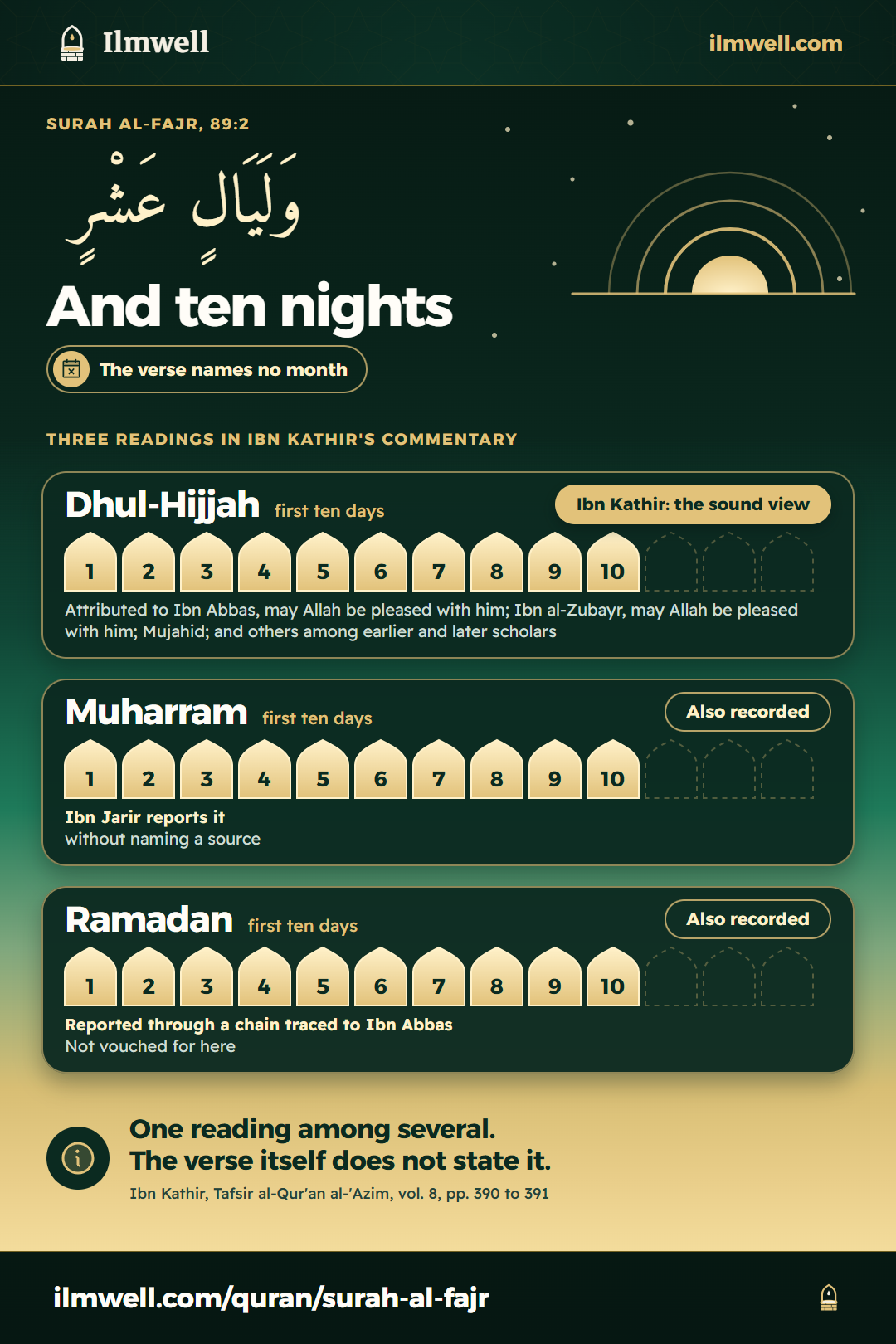
Verse 2 says "And ten nights" (source 6) and names no month. Ibn Kathir's commentary records more than one reading. Only the first is his stated preference.
Ibn Kathir identifies the ten nights as the first ten days of Dhul-Hijjah (the last month of the Islamic calendar). He attributes this view to Ibn Abbas, Ibn al-Zubayr, may Allah be pleased with him, and Mujahid, and to others among earlier and later scholars. He says this first view is the sound one (source 9).
His commentary also records two further readings: the first ten days of Muharram (the first month), which Ibn Jarir reports without naming a source, and the first ten days of Ramadan, which it reports through a chain traced to Ibn Abbas (source 10). This page does not vouch for that attribution. The Dhul-Hijjah identification is therefore one reading among several in the commentary. The verse itself does not state it.
What does Al-Fajr say about provision, honour and the orphan?
In verses 15 and 16, a person says that his Lord honours him when He tries him by honouring him, and that his Lord despises him when He straitens his means of life. Verse 17 opens with "No!" and names the orphan who is not honoured. Verses 18 to 20 name the poor who are not urged to be fed, inheritance devoured with greed, and wealth loved with abounding love (source 12). The verses do not say why any particular person is rich or poor.
What do the final verses mean?
Verses 27 to 30 address the soul at peace. It is told to return to its Lord, content in His good pleasure, to enter among His bondmen and to enter the Garden. In the order of the verses, the address follows the account of judgement in 89:21 to 26 (source 14, source 13).
The verses name no person, and this page makes no claim about any particular living or dead person's condition. For personal questions about grief or belief, speak with a scholar you trust.
Does the chapter prescribe a recitation routine?
This page gives no count, time or reward for reciting the chapter: a specific routine or a promised reward would need a graded source, and none is cited here. The dawn in the opening verse is one of the oaths, not a recitation schedule (source 6).
My niece asked me what the dawn at the start of Surah Al-Fajr meant while we were driving to the mosque for Fajr. The sky was just going light. I pointed out of the window, then admitted I would need to look up the rest.
Try it: Surah Al-Fajr in three questions
1How many verses does Surah Al-Fajr have?
Answer: Thirty. Thirty. The Tanzil text and the Tanzil metadata both give 30 for surah 89.
2Does verse 2 name Dhul-Hijjah?
Answer: No: it says ten nights. Verse 2 says ten nights. The Dhul-Hijjah reading is Ibn Kathir's preferred view, not the verse's own words.
3Which two failures do verses 17 and 18 name?
Answer: Not honouring the orphan; not urging the feeding of the poor. Verse 17 names the orphan who is not honoured, and verse 18 names the urging of the feeding of the poor that is left undone.
Sources
Every claim on this page comes from one of these. Gradings are reported with the scholar's name; we do not grade hadith ourselves.
- 1
Surah Al-Fajr, surah 89 and the eighty-ninth surah in the Mushaf order, has 30 verses.
- 2
The Tanzil metadata gives Surah 89 the transliterated name Al-Fajr and the English name The Dawn.
- 3
The Tanzil metadata classes Surah 89, Al-Fajr, as Meccan.
- 4
Ibn Kathir's commentary on Surah Al-Fajr opens with the classification Makki (Meccan): it says that the surah is Makki.
Ibn Kathir, Tafsir al-Qur'an al-'Azim (al-Salama edition), vol. 8, p. 390, the opening of the commentary on Surah Al-Fajr Electronic copy: not checked against print.
- 5
Surah 89 lies within the 30th juz (part) of the Quran, which the Tanzil juz table begins at 78:1.
- 6
Al-Fajr 89:1 to 5 opens with oaths by the dawn, by ten nights, by the even and the odd, and by the night as it departs, and says that there is an oath in these for a thinking person.
- 7
Ibn Kathir says that al-Fajr in 89:1 is well known and means the dawn, a meaning he attributes to Ali, Ibn Abbas, Mujahid, Ikrimah and al-Suddi; he also records the dawn of the Day of Sacrifice, attributed to Masruq, Mujahid and Muhammad ibn Ka'b.
Ibn Kathir, Tafsir al-Qur'an al-'Azim (al-Salama edition), vol. 8, p. 390, the commentary on 89:1 Electronic copy: not checked against print. The reports he quotes are not graded here.
- 8
Ibn Kathir records two further meanings of al-Fajr in 89:1: the prayer performed at that time, attributed to Ikrimah, and the whole day, in a report from Ibn Abbas.
Ibn Kathir, Tafsir al-Qur'an al-'Azim (al-Salama edition), vol. 8, p. 390, the commentary on 89:1 Electronic copy: not checked against print. The reports he quotes are not graded here.
- 9
Ibn Kathir says the ten nights in 89:2 are the first ten days of Dhul-Hijjah, a meaning he attributes to Ibn Abbas, Ibn al-Zubayr and Mujahid and to others among earlier and later scholars, and he says that this first view is the sound one.
Ibn Kathir, Tafsir al-Qur'an al-'Azim (al-Salama edition), vol. 8, pp. 390 to 391, the commentary on 89:2 Electronic copy: not checked against print. The reports he quotes are not graded here.
- 10
Ibn Kathir records two further meanings of the ten nights in 89:2: the first ten days of Muharram, which Ibn Jarir reports without naming a source, and the first ten days of Ramadan, reported through a chain from Ibn Abbas that he gives as Abu Kudayna, from Qabus ibn Abi Zabyan, from his father.
Ibn Kathir, Tafsir al-Qur'an al-'Azim (al-Salama edition), vol. 8, p. 391, the commentary on 89:2 Electronic copy: not checked against print. The reports he quotes are not graded here.
- 11
Al-Fajr 89:6 to 14 names A'ad, Iram, Thamud and Pharaoh, says they were rebellious in the lands and multiplied iniquity there, and says that the Lord poured on them the disaster of His punishment.
- 12
Al-Fajr 89:15 to 20 gives the words of a person who says that his Lord honours him when he is tried with honour, and that his Lord despises him when his means of life are restricted; it then says 'No!' and names not honouring the orphan, not urging the feeding of the poor, devouring heritages with greed, and loving wealth with abounding love.
- 13
Al-Fajr 89:21 to 26 describes judgement: the earth ground to atoms, the Lord coming with angels rank on rank, hell brought near, and the words that man will remember on that day and wish he had sent provision before him.
- 14
Al-Fajr 89:27 to 30 addresses the soul at peace, as the adapted English renders it, telling it to return to its Lord content in His good pleasure, to enter among His bondmen, and to enter His Garden.
- Q
Quran Arabic on this page is the Tanzil Uthmani text, and the English is the adapted Pickthall translation (1930).
Tanzil Project English: adapted from Marmaduke Pickthall's translation (1930), modernised and checked against modern translations.
Next
- Sabr: meaning and examplesTopic page
- ZakatGuide
- Sadaqah jariyahGuide
- Al-MulkQuran lesson
- Quran and SurahsThe hub
Join the email list
New guides by email, now and then. No spam, and you can leave at any time.
Ilmwell is free and kept going by readers. See how to support it.