The short answer
Surah Muhammad is the 47th surah of the Quran, with 38 verses, and the Tanzil metadata lists it as Medinan (from after the move to Madinah) (source 1). It carries the name of the Prophet Muhammad, peace be upon him, which appears in verse 2. Its passages include deeds, fighting and captives (47:4, meaning surah 47, verse 4), Paradise, and the call to ponder the Quran (47:24).
What is Surah Muhammad?
Also written Surat Muhammad, it is surah 47 in the Mushaf, the written Quran in its standard order, and the Tanzil metadata classes it as Medinan without saying how (source 1).
The name Muhammad is in verse 2, on those who "believe in that which is revealed to Muhammad" (source 2). For his life, see The Prophet Muhammad.
Arabic reads right to left, so the first word is on the right.
- مُحَمَّدٍMuhammadMuhammadThe name in verse 2.
What does Ibn Kathir's edition call this surah?
In the edition of Ibn Kathir's Tafsir read for this page, the commentary is headed "Tafsir of Surah al-Qital" and closes with "the end of the tafsir of Surah al-Qital" (vol. 7, pp. 306 and 324, source 3). The heading is printed in square brackets, as is the "it is Madaniyyah" line below it, and the closing line is not. The King Saud University copy heads it "Surah Muhammad" and closes with the same line. The edition's footnote explains only the second bracketed line, so this page does not say who supplied the heading, and cites no source on why the name was used.
What is the context of Surah Muhammad?
This page cites no date for the surah as a whole. The edition of Ibn Kathir's Tafsir prints "it is Madaniyyah" in square brackets under its heading, with a footnote marking the words as an addition (vol. 7, p. 306, source 4). The King Saud University copy has no such line, so this page does not say Ibn Kathir wrote it.
Verse 13 speaks of a township stronger than the one that "has cast you out" and names no place (source 5). Ibn Kathir says the township meant is Makkah (vol. 7, p. 311, source 6).
What are the main themes and passages of Surah Muhammad?
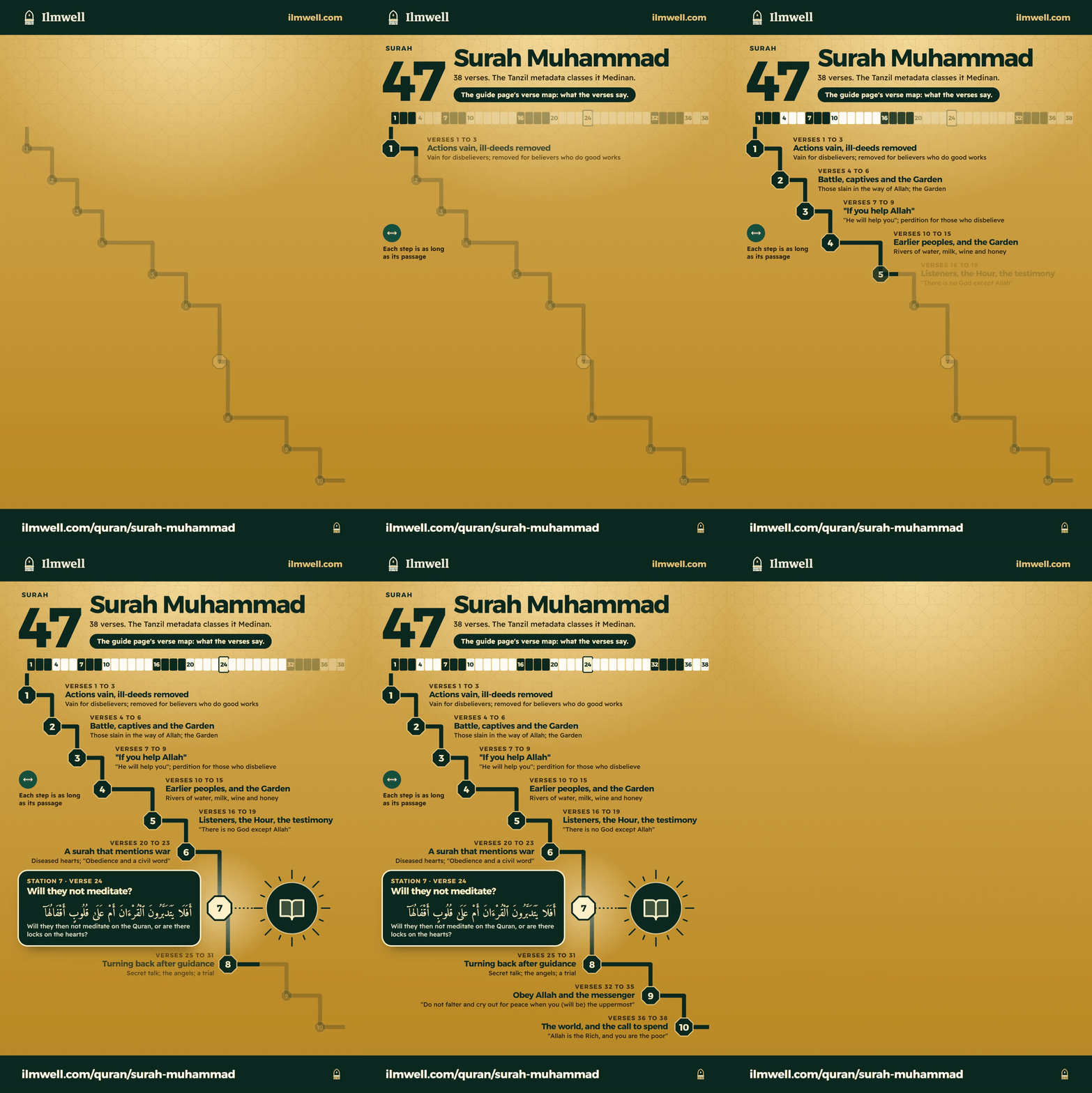
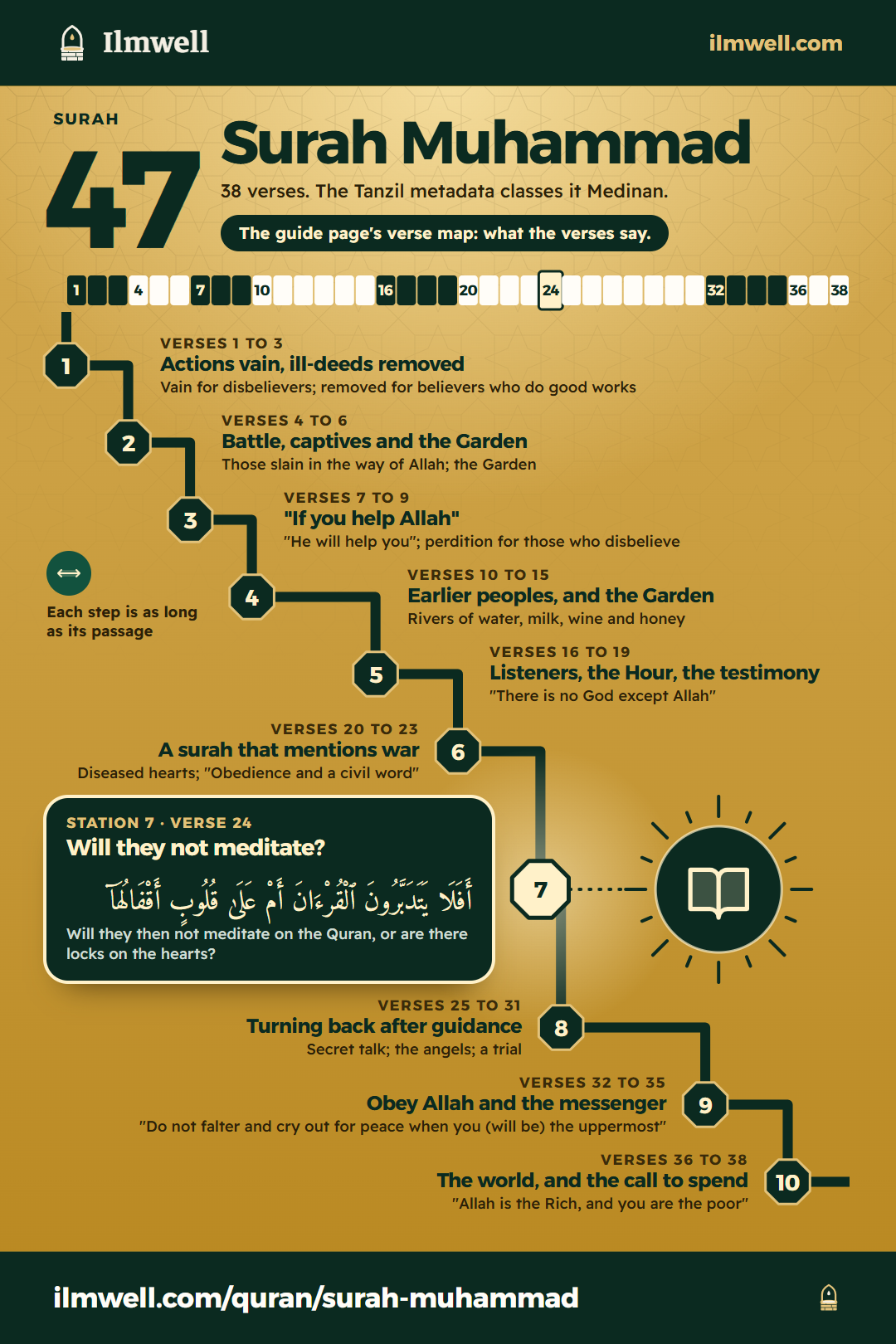
The map says what the verses say; the sections after it give Ibn Kathir's readings, never a ruling.
| Verses | What the verses say | Source |
|---|---|---|
| 1 to 3 | Actions made vain for disbelievers; ill-deeds removed for those who believe and do good works. | 2 |
| 4 to 6 | Meeting disbelievers in battle; captives; those slain in the way of Allah; the Garden. | 7 |
| 7 to 9 | "If you help Allah, He will help you"; perdition for those who disbelieve. | 8 |
| 10 to 15 | Earlier peoples destroyed; Allah as patron of the believers; a likeness of the Garden, with rivers of water, milk, wine and honey. | 5 |
| 16 to 19 | Some who listen and ask what was said; the Hour; "there is no God except Allah". | 9 |
| 20 to 23 | A surah that mentions war; diseased hearts; "Obedience and a civil word". | 10 |
| 24 | "Will they then not meditate on the Quran" | 11 |
| 25 to 31 | Turning back after guidance; secret talk; the angels; a trial "till We know those of you who strive hard". | 12 |
| 32 to 35 | "Obey Allah and obey the messenger"; "do not falter and cry out for peace when you (will be) the uppermost". | 13 |
| 36 to 38 | The world "a sport and a pastime"; the call to spend; "Allah is the Rich, and you are the poor". | 14 |
Verse 4: fighting and captives
Verse 4 in full (source 7):
Now when you meet in battle those who disbelieve, then it is smiting of the necks until, when you have routed them, then making fast of bonds; and afterward either grace or ransom till the war lay down its burdens. That (is the ordinance). And if Allah willed He could have punished them (without you) but (thus it is ordained) that He may try some of you by means of others. And those who are slain in the way of Allah, He does not render their actions vain.
The verse speaks to "you" in the plural and names no addressee. For captives it names "either grace or ransom", and it ends with those slain in the way of Allah, whose actions He does not render vain.
Ibn Kathir reads it as guidance for the believers in their wars with the idolaters, with captives left to their choice between release and ransom. He says the evident sense is that it came down after Badr, when Allah rebuked the believers for taking many captives and killing few (vol. 7, p. 307, source 15).
On whether 9:5 (see Surah Tawbah) abrogated that choice, he reports that some said so, among them Qatada and Ibn Jurayj, and a report from al-'Awfi from Ibn Abbas, may Allah be pleased with him. Others, "the majority" in his words, said it was not abrogated, and differed on whether the imam, the leader of the Muslims, may also put a captive to death. He sends the detail to fiqh and to his own al-Ahkam (vol. 7, p. 307, source 16).
After quoting two reports about the war's end, he writes, as his own assessment, that this "strengthens the view of no abrogation" (vol. 7, pp. 307 to 308, source 16). The verses do not mention 9:5 (At-Tawbah, verse 5), and this page does not weigh the views.
Verses 16 and 20: the hypocrites and the surah that mentions war
Verse 16 speaks of some who give ear to the Prophet and, once outside, ask those given knowledge, "What was that he said just now?" (source 9). Verse 20 says that when a decisive surah is revealed and war is mentioned, those with a disease in their hearts look "with the look of men fainting to death".
Ibn Kathir takes verse 16 to be about the hypocrites, who sat with the Prophet and understood nothing, then asked his companions who had knowledge, may Allah be pleased with them, what he had said (vol. 7, p. 315, source 17). On verse 20 he says the believers had wished for fighting to be legislated and many drew back when it came. He reads the fainting look as the fear, terror and cowardice of those with diseased hearts at meeting the enemy (vol. 7, p. 317, source 18). The verses themselves do not use the word hypocrites.
Verse 24: will they not ponder the Quran?
Will they then not meditate on the Quran, or are there locks on the hearts?
The verse asks "Will they then not meditate on the Quran" or whether there are locks on the hearts (source 11). How to understand the Quran covers a way in.
Ibn Kathir reads it as a command to ponder the Quran and understand it, and a prohibition on turning away, and takes the locks to be closed hearts that none of its meanings reach (vol. 7, p. 320, source 19). He then quotes a report from al-Tabari, through Hisham ibn 'Urwa from his father, that the Prophet recited it one day and a young man from Yemen said there are locks on them until Allah opens or relieves them. 'Umar, may Allah be pleased with him, kept the young man in mind and sought his help when he took office (source 20). The chain as quoted names no Companion, and this page has not graded it.
Verses 33 to 35: obedience, deeds and peace
Verse 33 tells the believers: "Obey Allah and obey the messenger, and render not your actions vain." Verse 35 says "do not falter and cry out for peace when you (will be) the uppermost" (source 13).
Ibn Kathir reads the last words of verse 33 as a prohibition on apostasy, which he says nullifies deeds (vol. 7, p. 323, source 21). On verse 35 he reads the warning against crying out for peace as applying while the believers are strong and many. He does not read it as barring every treaty. Where the unbelievers are stronger and the imam sees benefit, he says the imam may make one, as the Prophet did when the Quraysh barred him from Makkah and called him to a ten-year peace (vol. 7, p. 323, source 22). This page does not rule on peace, treaties or fighting. See also Surah Al-Fath.
Can you read the whole of Surah Muhammad online?
Yes. The full Arabic is below, then verse by verse with the English. The button under the scroll copies the Arabic.
Muhammad 47:1 to 38
ٱلَّذِينَ كَفَرُوا۟ وَصَدُّوا۟ عَن سَبِيلِ ٱللَّهِ أَضَلَّ أَعْمَـٰلَهُمْ ١ وَٱلَّذِينَ ءَامَنُوا۟ وَعَمِلُوا۟ ٱلصَّـٰلِحَـٰتِ وَءَامَنُوا۟ بِمَا نُزِّلَ عَلَىٰ مُحَمَّدٍ وَهُوَ ٱلْحَقُّ مِن رَّبِّهِمْ ۙ كَفَّرَ عَنْهُمْ سَيِّـَٔاتِهِمْ وَأَصْلَحَ بَالَهُمْ ٢ ذَٰلِكَ بِأَنَّ ٱلَّذِينَ كَفَرُوا۟ ٱتَّبَعُوا۟ ٱلْبَـٰطِلَ وَأَنَّ ٱلَّذِينَ ءَامَنُوا۟ ٱتَّبَعُوا۟ ٱلْحَقَّ مِن رَّبِّهِمْ ۚ كَذَٰلِكَ يَضْرِبُ ٱللَّهُ لِلنَّاسِ أَمْثَـٰلَهُمْ ٣ فَإِذَا لَقِيتُمُ ٱلَّذِينَ كَفَرُوا۟ فَضَرْبَ ٱلرِّقَابِ حَتَّىٰٓ إِذَآ أَثْخَنتُمُوهُمْ فَشُدُّوا۟ ٱلْوَثَاقَ فَإِمَّا مَنًّۢا بَعْدُ وَإِمَّا فِدَآءً حَتَّىٰ تَضَعَ ٱلْحَرْبُ أَوْزَارَهَا ۚ ذَٰلِكَ وَلَوْ يَشَآءُ ٱللَّهُ لَٱنتَصَرَ مِنْهُمْ وَلَـٰكِن لِّيَبْلُوَا۟ بَعْضَكُم بِبَعْضٍ ۗ وَٱلَّذِينَ قُتِلُوا۟ فِى سَبِيلِ ٱللَّهِ فَلَن يُضِلَّ أَعْمَـٰلَهُمْ ٤ سَيَهْدِيهِمْ وَيُصْلِحُ بَالَهُمْ ٥ وَيُدْخِلُهُمُ ٱلْجَنَّةَ عَرَّفَهَا لَهُمْ ٦ يَـٰٓأَيُّهَا ٱلَّذِينَ ءَامَنُوٓا۟ إِن تَنصُرُوا۟ ٱللَّهَ يَنصُرْكُمْ وَيُثَبِّتْ أَقْدَامَكُمْ ٧ وَٱلَّذِينَ كَفَرُوا۟ فَتَعْسًا لَّهُمْ وَأَضَلَّ أَعْمَـٰلَهُمْ ٨ ذَٰلِكَ بِأَنَّهُمْ كَرِهُوا۟ مَآ أَنزَلَ ٱللَّهُ فَأَحْبَطَ أَعْمَـٰلَهُمْ ٩ ۞ أَفَلَمْ يَسِيرُوا۟ فِى ٱلْأَرْضِ فَيَنظُرُوا۟ كَيْفَ كَانَ عَـٰقِبَةُ ٱلَّذِينَ مِن قَبْلِهِمْ ۚ دَمَّرَ ٱللَّهُ عَلَيْهِمْ ۖ وَلِلْكَـٰفِرِينَ أَمْثَـٰلُهَا ١٠ ذَٰلِكَ بِأَنَّ ٱللَّهَ مَوْلَى ٱلَّذِينَ ءَامَنُوا۟ وَأَنَّ ٱلْكَـٰفِرِينَ لَا مَوْلَىٰ لَهُمْ ١١ إِنَّ ٱللَّهَ يُدْخِلُ ٱلَّذِينَ ءَامَنُوا۟ وَعَمِلُوا۟ ٱلصَّـٰلِحَـٰتِ جَنَّـٰتٍ تَجْرِى مِن تَحْتِهَا ٱلْأَنْهَـٰرُ ۖ وَٱلَّذِينَ كَفَرُوا۟ يَتَمَتَّعُونَ وَيَأْكُلُونَ كَمَا تَأْكُلُ ٱلْأَنْعَـٰمُ وَٱلنَّارُ مَثْوًى لَّهُمْ ١٢ وَكَأَيِّن مِّن قَرْيَةٍ هِىَ أَشَدُّ قُوَّةً مِّن قَرْيَتِكَ ٱلَّتِىٓ أَخْرَجَتْكَ أَهْلَكْنَـٰهُمْ فَلَا نَاصِرَ لَهُمْ ١٣ أَفَمَن كَانَ عَلَىٰ بَيِّنَةٍ مِّن رَّبِّهِۦ كَمَن زُيِّنَ لَهُۥ سُوٓءُ عَمَلِهِۦ وَٱتَّبَعُوٓا۟ أَهْوَآءَهُم ١٤ مَّثَلُ ٱلْجَنَّةِ ٱلَّتِى وُعِدَ ٱلْمُتَّقُونَ ۖ فِيهَآ أَنْهَـٰرٌ مِّن مَّآءٍ غَيْرِ ءَاسِنٍ وَأَنْهَـٰرٌ مِّن لَّبَنٍ لَّمْ يَتَغَيَّرْ طَعْمُهُۥ وَأَنْهَـٰرٌ مِّنْ خَمْرٍ لَّذَّةٍ لِّلشَّـٰرِبِينَ وَأَنْهَـٰرٌ مِّنْ عَسَلٍ مُّصَفًّى ۖ وَلَهُمْ فِيهَا مِن كُلِّ ٱلثَّمَرَٰتِ وَمَغْفِرَةٌ مِّن رَّبِّهِمْ ۖ كَمَنْ هُوَ خَـٰلِدٌ فِى ٱلنَّارِ وَسُقُوا۟ مَآءً حَمِيمًا فَقَطَّعَ أَمْعَآءَهُمْ ١٥ وَمِنْهُم مَّن يَسْتَمِعُ إِلَيْكَ حَتَّىٰٓ إِذَا خَرَجُوا۟ مِنْ عِندِكَ قَالُوا۟ لِلَّذِينَ أُوتُوا۟ ٱلْعِلْمَ مَاذَا قَالَ ءَانِفًا ۚ أُو۟لَـٰٓئِكَ ٱلَّذِينَ طَبَعَ ٱللَّهُ عَلَىٰ قُلُوبِهِمْ وَٱتَّبَعُوٓا۟ أَهْوَآءَهُمْ ١٦ وَٱلَّذِينَ ٱهْتَدَوْا۟ زَادَهُمْ هُدًى وَءَاتَىٰهُمْ تَقْوَىٰهُمْ ١٧ فَهَلْ يَنظُرُونَ إِلَّا ٱلسَّاعَةَ أَن تَأْتِيَهُم بَغْتَةً ۖ فَقَدْ جَآءَ أَشْرَاطُهَا ۚ فَأَنَّىٰ لَهُمْ إِذَا جَآءَتْهُمْ ذِكْرَىٰهُمْ ١٨ فَٱعْلَمْ أَنَّهُۥ لَآ إِلَـٰهَ إِلَّا ٱللَّهُ وَٱسْتَغْفِرْ لِذَنۢبِكَ وَلِلْمُؤْمِنِينَ وَٱلْمُؤْمِنَـٰتِ ۗ وَٱللَّهُ يَعْلَمُ مُتَقَلَّبَكُمْ وَمَثْوَىٰكُمْ ١٩ وَيَقُولُ ٱلَّذِينَ ءَامَنُوا۟ لَوْلَا نُزِّلَتْ سُورَةٌ ۖ فَإِذَآ أُنزِلَتْ سُورَةٌ مُّحْكَمَةٌ وَذُكِرَ فِيهَا ٱلْقِتَالُ ۙ رَأَيْتَ ٱلَّذِينَ فِى قُلُوبِهِم مَّرَضٌ يَنظُرُونَ إِلَيْكَ نَظَرَ ٱلْمَغْشِىِّ عَلَيْهِ مِنَ ٱلْمَوْتِ ۖ فَأَوْلَىٰ لَهُمْ ٢٠ طَاعَةٌ وَقَوْلٌ مَّعْرُوفٌ ۚ فَإِذَا عَزَمَ ٱلْأَمْرُ فَلَوْ صَدَقُوا۟ ٱللَّهَ لَكَانَ خَيْرًا لَّهُمْ ٢١ فَهَلْ عَسَيْتُمْ إِن تَوَلَّيْتُمْ أَن تُفْسِدُوا۟ فِى ٱلْأَرْضِ وَتُقَطِّعُوٓا۟ أَرْحَامَكُمْ ٢٢ أُو۟لَـٰٓئِكَ ٱلَّذِينَ لَعَنَهُمُ ٱللَّهُ فَأَصَمَّهُمْ وَأَعْمَىٰٓ أَبْصَـٰرَهُمْ ٢٣ أَفَلَا يَتَدَبَّرُونَ ٱلْقُرْءَانَ أَمْ عَلَىٰ قُلُوبٍ أَقْفَالُهَآ ٢٤ إِنَّ ٱلَّذِينَ ٱرْتَدُّوا۟ عَلَىٰٓ أَدْبَـٰرِهِم مِّنۢ بَعْدِ مَا تَبَيَّنَ لَهُمُ ٱلْهُدَى ۙ ٱلشَّيْطَـٰنُ سَوَّلَ لَهُمْ وَأَمْلَىٰ لَهُمْ ٢٥ ذَٰلِكَ بِأَنَّهُمْ قَالُوا۟ لِلَّذِينَ كَرِهُوا۟ مَا نَزَّلَ ٱللَّهُ سَنُطِيعُكُمْ فِى بَعْضِ ٱلْأَمْرِ ۖ وَٱللَّهُ يَعْلَمُ إِسْرَارَهُمْ ٢٦ فَكَيْفَ إِذَا تَوَفَّتْهُمُ ٱلْمَلَـٰٓئِكَةُ يَضْرِبُونَ وُجُوهَهُمْ وَأَدْبَـٰرَهُمْ ٢٧ ذَٰلِكَ بِأَنَّهُمُ ٱتَّبَعُوا۟ مَآ أَسْخَطَ ٱللَّهَ وَكَرِهُوا۟ رِضْوَٰنَهُۥ فَأَحْبَطَ أَعْمَـٰلَهُمْ ٢٨ أَمْ حَسِبَ ٱلَّذِينَ فِى قُلُوبِهِم مَّرَضٌ أَن لَّن يُخْرِجَ ٱللَّهُ أَضْغَـٰنَهُمْ ٢٩ وَلَوْ نَشَآءُ لَأَرَيْنَـٰكَهُمْ فَلَعَرَفْتَهُم بِسِيمَـٰهُمْ ۚ وَلَتَعْرِفَنَّهُمْ فِى لَحْنِ ٱلْقَوْلِ ۚ وَٱللَّهُ يَعْلَمُ أَعْمَـٰلَكُمْ ٣٠ وَلَنَبْلُوَنَّكُمْ حَتَّىٰ نَعْلَمَ ٱلْمُجَـٰهِدِينَ مِنكُمْ وَٱلصَّـٰبِرِينَ وَنَبْلُوَا۟ أَخْبَارَكُمْ ٣١ إِنَّ ٱلَّذِينَ كَفَرُوا۟ وَصَدُّوا۟ عَن سَبِيلِ ٱللَّهِ وَشَآقُّوا۟ ٱلرَّسُولَ مِنۢ بَعْدِ مَا تَبَيَّنَ لَهُمُ ٱلْهُدَىٰ لَن يَضُرُّوا۟ ٱللَّهَ شَيْـًٔا وَسَيُحْبِطُ أَعْمَـٰلَهُمْ ٣٢ ۞ يَـٰٓأَيُّهَا ٱلَّذِينَ ءَامَنُوٓا۟ أَطِيعُوا۟ ٱللَّهَ وَأَطِيعُوا۟ ٱلرَّسُولَ وَلَا تُبْطِلُوٓا۟ أَعْمَـٰلَكُمْ ٣٣ إِنَّ ٱلَّذِينَ كَفَرُوا۟ وَصَدُّوا۟ عَن سَبِيلِ ٱللَّهِ ثُمَّ مَاتُوا۟ وَهُمْ كُفَّارٌ فَلَن يَغْفِرَ ٱللَّهُ لَهُمْ ٣٤ فَلَا تَهِنُوا۟ وَتَدْعُوٓا۟ إِلَى ٱلسَّلْمِ وَأَنتُمُ ٱلْأَعْلَوْنَ وَٱللَّهُ مَعَكُمْ وَلَن يَتِرَكُمْ أَعْمَـٰلَكُمْ ٣٥ إِنَّمَا ٱلْحَيَوٰةُ ٱلدُّنْيَا لَعِبٌ وَلَهْوٌ ۚ وَإِن تُؤْمِنُوا۟ وَتَتَّقُوا۟ يُؤْتِكُمْ أُجُورَكُمْ وَلَا يَسْـَٔلْكُمْ أَمْوَٰلَكُمْ ٣٦ إِن يَسْـَٔلْكُمُوهَا فَيُحْفِكُمْ تَبْخَلُوا۟ وَيُخْرِجْ أَضْغَـٰنَكُمْ ٣٧ هَـٰٓأَنتُمْ هَـٰٓؤُلَآءِ تُدْعَوْنَ لِتُنفِقُوا۟ فِى سَبِيلِ ٱللَّهِ فَمِنكُم مَّن يَبْخَلُ ۖ وَمَن يَبْخَلْ فَإِنَّمَا يَبْخَلُ عَن نَّفْسِهِۦ ۚ وَٱللَّهُ ٱلْغَنِىُّ وَأَنتُمُ ٱلْفُقَرَآءُ ۚ وَإِن تَتَوَلَّوْا۟ يَسْتَبْدِلْ قَوْمًا غَيْرَكُمْ ثُمَّ لَا يَكُونُوٓا۟ أَمْثَـٰلَكُم ٣٨
Verses 1 to 3
- 1
ٱلَّذِينَ كَفَرُوا۟ وَصَدُّوا۟ عَن سَبِيلِ ٱللَّهِ أَضَلَّ أَعْمَـٰلَهُمْ
Those who disbelieve and turn (men) from the way of Allah, He renders their actions vain.
- 2
وَٱلَّذِينَ ءَامَنُوا۟ وَعَمِلُوا۟ ٱلصَّـٰلِحَـٰتِ وَءَامَنُوا۟ بِمَا نُزِّلَ عَلَىٰ مُحَمَّدٍ وَهُوَ ٱلْحَقُّ مِن رَّبِّهِمْ ۙ كَفَّرَ عَنْهُمْ سَيِّـَٔاتِهِمْ وَأَصْلَحَ بَالَهُمْ
And those who believe and do good works and believe in that which is revealed to Muhammad - and it is the truth from their Lord - He rids them of their ill-deeds and improves their state.
- 3
ذَٰلِكَ بِأَنَّ ٱلَّذِينَ كَفَرُوا۟ ٱتَّبَعُوا۟ ٱلْبَـٰطِلَ وَأَنَّ ٱلَّذِينَ ءَامَنُوا۟ ٱتَّبَعُوا۟ ٱلْحَقَّ مِن رَّبِّهِمْ ۚ كَذَٰلِكَ يَضْرِبُ ٱللَّهُ لِلنَّاسِ أَمْثَـٰلَهُمْ
That is because those who disbelieve follow falsehood and because those who believe follow the truth from their Lord. Thus Allah coins their similitudes for mankind.
Verses 4 to 6
- 4
فَإِذَا لَقِيتُمُ ٱلَّذِينَ كَفَرُوا۟ فَضَرْبَ ٱلرِّقَابِ حَتَّىٰٓ إِذَآ أَثْخَنتُمُوهُمْ فَشُدُّوا۟ ٱلْوَثَاقَ فَإِمَّا مَنًّۢا بَعْدُ وَإِمَّا فِدَآءً حَتَّىٰ تَضَعَ ٱلْحَرْبُ أَوْزَارَهَا ۚ ذَٰلِكَ وَلَوْ يَشَآءُ ٱللَّهُ لَٱنتَصَرَ مِنْهُمْ وَلَـٰكِن لِّيَبْلُوَا۟ بَعْضَكُم بِبَعْضٍ ۗ وَٱلَّذِينَ قُتِلُوا۟ فِى سَبِيلِ ٱللَّهِ فَلَن يُضِلَّ أَعْمَـٰلَهُمْ
Now when you meet in battle those who disbelieve, then it is smiting of the necks until, when you have routed them, then making fast of bonds; and afterward either grace or ransom till the war lay down its burdens. That (is the ordinance). And if Allah willed He could have punished them (without you) but (thus it is ordained) that He may try some of you by means of others. And those who are slain in the way of Allah, He does not render their actions vain.
- 5
سَيَهْدِيهِمْ وَيُصْلِحُ بَالَهُمْ
He will guide them and improve their state,
- 6
وَيُدْخِلُهُمُ ٱلْجَنَّةَ عَرَّفَهَا لَهُمْ
And bring them in to the Garden which He has made known to them.
Verses 7 to 9
- 7
يَـٰٓأَيُّهَا ٱلَّذِينَ ءَامَنُوٓا۟ إِن تَنصُرُوا۟ ٱللَّهَ يَنصُرْكُمْ وَيُثَبِّتْ أَقْدَامَكُمْ
O you who believe! If you help Allah, He will help you and will make your foothold firm.
- 8
وَٱلَّذِينَ كَفَرُوا۟ فَتَعْسًا لَّهُمْ وَأَضَلَّ أَعْمَـٰلَهُمْ
And those who disbelieve, perdition is for them, and He will make their actions vain.
- 9
ذَٰلِكَ بِأَنَّهُمْ كَرِهُوا۟ مَآ أَنزَلَ ٱللَّهُ فَأَحْبَطَ أَعْمَـٰلَهُمْ
That is because they are averse to that which Allah has revealed, therefore makes He their actions fruitless.
Verses 10 to 15
- 10
۞ أَفَلَمْ يَسِيرُوا۟ فِى ٱلْأَرْضِ فَيَنظُرُوا۟ كَيْفَ كَانَ عَـٰقِبَةُ ٱلَّذِينَ مِن قَبْلِهِمْ ۚ دَمَّرَ ٱللَّهُ عَلَيْهِمْ ۖ وَلِلْكَـٰفِرِينَ أَمْثَـٰلُهَا
Have they not travelled in the land to see the nature of the consequence for those who were before them? Allah wiped them out. And for the disbelievers there will be the like thereof.
- 11
ذَٰلِكَ بِأَنَّ ٱللَّهَ مَوْلَى ٱلَّذِينَ ءَامَنُوا۟ وَأَنَّ ٱلْكَـٰفِرِينَ لَا مَوْلَىٰ لَهُمْ
That is because Allah is patron of those who believe, and because the disbelievers have no patron.
- 12
إِنَّ ٱللَّهَ يُدْخِلُ ٱلَّذِينَ ءَامَنُوا۟ وَعَمِلُوا۟ ٱلصَّـٰلِحَـٰتِ جَنَّـٰتٍ تَجْرِى مِن تَحْتِهَا ٱلْأَنْهَـٰرُ ۖ وَٱلَّذِينَ كَفَرُوا۟ يَتَمَتَّعُونَ وَيَأْكُلُونَ كَمَا تَأْكُلُ ٱلْأَنْعَـٰمُ وَٱلنَّارُ مَثْوًى لَّهُمْ
Indeed, Allah will cause those who believe and do good works to enter Gardens underneath which rivers flow; while those who disbelieve take their comfort in this life and eat even as the cattle eat, and the Fire is their habitation.
- 13
وَكَأَيِّن مِّن قَرْيَةٍ هِىَ أَشَدُّ قُوَّةً مِّن قَرْيَتِكَ ٱلَّتِىٓ أَخْرَجَتْكَ أَهْلَكْنَـٰهُمْ فَلَا نَاصِرَ لَهُمْ
And how many a township stronger than your township (O Muhammad) which has cast you out, have We destroyed, and they had no helper!
- 14
أَفَمَن كَانَ عَلَىٰ بَيِّنَةٍ مِّن رَّبِّهِۦ كَمَن زُيِّنَ لَهُۥ سُوٓءُ عَمَلِهِۦ وَٱتَّبَعُوٓا۟ أَهْوَآءَهُم
Is he who relies on a clear proof from his Lord like those for whom the evil that they do is beautified while they follow their own lusts?
- 15
مَّثَلُ ٱلْجَنَّةِ ٱلَّتِى وُعِدَ ٱلْمُتَّقُونَ ۖ فِيهَآ أَنْهَـٰرٌ مِّن مَّآءٍ غَيْرِ ءَاسِنٍ وَأَنْهَـٰرٌ مِّن لَّبَنٍ لَّمْ يَتَغَيَّرْ طَعْمُهُۥ وَأَنْهَـٰرٌ مِّنْ خَمْرٍ لَّذَّةٍ لِّلشَّـٰرِبِينَ وَأَنْهَـٰرٌ مِّنْ عَسَلٍ مُّصَفًّى ۖ وَلَهُمْ فِيهَا مِن كُلِّ ٱلثَّمَرَٰتِ وَمَغْفِرَةٌ مِّن رَّبِّهِمْ ۖ كَمَنْ هُوَ خَـٰلِدٌ فِى ٱلنَّارِ وَسُقُوا۟ مَآءً حَمِيمًا فَقَطَّعَ أَمْعَآءَهُمْ
A similitude of the Garden which those who keep their duty (to Allah) are promised: Therein are rivers of water unpolluted, and rivers of milk whereof the flavour changes not, and rivers of wine delicious to the drinkers, and rivers of clear-run honey; therein for them is every kind of fruit, with pardon from their Lord. (Are those who enjoy all this) like those who are immortal in the Fire and are given boiling water to drink so that it tears their bowels?
Verses 16 to 19
- 16
وَمِنْهُم مَّن يَسْتَمِعُ إِلَيْكَ حَتَّىٰٓ إِذَا خَرَجُوا۟ مِنْ عِندِكَ قَالُوا۟ لِلَّذِينَ أُوتُوا۟ ٱلْعِلْمَ مَاذَا قَالَ ءَانِفًا ۚ أُو۟لَـٰٓئِكَ ٱلَّذِينَ طَبَعَ ٱللَّهُ عَلَىٰ قُلُوبِهِمْ وَٱتَّبَعُوٓا۟ أَهْوَآءَهُمْ
Among them are some who give ear to you (Muhammad) till, when they go forth from your presence they say to those who have been given knowledge: What was that he said just now? Those are they whose hearts Allah has sealed, and they follow their own lusts.
- 17
وَٱلَّذِينَ ٱهْتَدَوْا۟ زَادَهُمْ هُدًى وَءَاتَىٰهُمْ تَقْوَىٰهُمْ
While as for those who walk aright, He adds to their guidance, and gives them their protection (against evil).
- 18
فَهَلْ يَنظُرُونَ إِلَّا ٱلسَّاعَةَ أَن تَأْتِيَهُم بَغْتَةً ۖ فَقَدْ جَآءَ أَشْرَاطُهَا ۚ فَأَنَّىٰ لَهُمْ إِذَا جَآءَتْهُمْ ذِكْرَىٰهُمْ
Await they anything except the Hour, that it should come upon them unawares? And the beginnings thereof have already come. But how, when it has come upon them, can they take their warning?
- 19
فَٱعْلَمْ أَنَّهُۥ لَآ إِلَـٰهَ إِلَّا ٱللَّهُ وَٱسْتَغْفِرْ لِذَنۢبِكَ وَلِلْمُؤْمِنِينَ وَٱلْمُؤْمِنَـٰتِ ۗ وَٱللَّهُ يَعْلَمُ مُتَقَلَّبَكُمْ وَمَثْوَىٰكُمْ
So know (O Muhammad) that there is no God except Allah, and ask forgiveness for your sin and for believing men and believing women. Allah knows (both) your place of turmoil and your place of rest.
Verses 20 to 23
- 20
وَيَقُولُ ٱلَّذِينَ ءَامَنُوا۟ لَوْلَا نُزِّلَتْ سُورَةٌ ۖ فَإِذَآ أُنزِلَتْ سُورَةٌ مُّحْكَمَةٌ وَذُكِرَ فِيهَا ٱلْقِتَالُ ۙ رَأَيْتَ ٱلَّذِينَ فِى قُلُوبِهِم مَّرَضٌ يَنظُرُونَ إِلَيْكَ نَظَرَ ٱلْمَغْشِىِّ عَلَيْهِ مِنَ ٱلْمَوْتِ ۖ فَأَوْلَىٰ لَهُمْ
And those who believe say: If only a surah were revealed! But when a decisive surah is revealed and war is mentioned therein, you see those in whose hearts is a disease looking at you with the look of men fainting to death. Therefore woe to them!
- 21
طَاعَةٌ وَقَوْلٌ مَّعْرُوفٌ ۚ فَإِذَا عَزَمَ ٱلْأَمْرُ فَلَوْ صَدَقُوا۟ ٱللَّهَ لَكَانَ خَيْرًا لَّهُمْ
Obedience and a civil word. Then, when the matter is determined, if they are loyal to Allah it will be well for them.
- 22
فَهَلْ عَسَيْتُمْ إِن تَوَلَّيْتُمْ أَن تُفْسِدُوا۟ فِى ٱلْأَرْضِ وَتُقَطِّعُوٓا۟ أَرْحَامَكُمْ
Would you then, if you were given the command, work corruption in the land and sever your ties of kinship?
- 23
أُو۟لَـٰٓئِكَ ٱلَّذِينَ لَعَنَهُمُ ٱللَّهُ فَأَصَمَّهُمْ وَأَعْمَىٰٓ أَبْصَـٰرَهُمْ
Such are they whom Allah curses so that He deafens them and makes blind their eyes.
Verses 24
- 24
أَفَلَا يَتَدَبَّرُونَ ٱلْقُرْءَانَ أَمْ عَلَىٰ قُلُوبٍ أَقْفَالُهَآ
Will they then not meditate on the Quran, or are there locks on the hearts?
Verses 25 to 31
- 25
إِنَّ ٱلَّذِينَ ٱرْتَدُّوا۟ عَلَىٰٓ أَدْبَـٰرِهِم مِّنۢ بَعْدِ مَا تَبَيَّنَ لَهُمُ ٱلْهُدَى ۙ ٱلشَّيْطَـٰنُ سَوَّلَ لَهُمْ وَأَمْلَىٰ لَهُمْ
Indeed, those who turn back after the guidance has been manifested to them, Satan has seduced them, and He gives them the rein.
- 26
ذَٰلِكَ بِأَنَّهُمْ قَالُوا۟ لِلَّذِينَ كَرِهُوا۟ مَا نَزَّلَ ٱللَّهُ سَنُطِيعُكُمْ فِى بَعْضِ ٱلْأَمْرِ ۖ وَٱللَّهُ يَعْلَمُ إِسْرَارَهُمْ
That is because they say to those who hate what Allah has revealed: We will obey you in some matters; and Allah knows their secret talk.
- 27
فَكَيْفَ إِذَا تَوَفَّتْهُمُ ٱلْمَلَـٰٓئِكَةُ يَضْرِبُونَ وُجُوهَهُمْ وَأَدْبَـٰرَهُمْ
Then how (will it be with them) when the angels gather them, smiting their faces and their backs!
- 28
ذَٰلِكَ بِأَنَّهُمُ ٱتَّبَعُوا۟ مَآ أَسْخَطَ ٱللَّهَ وَكَرِهُوا۟ رِضْوَٰنَهُۥ فَأَحْبَطَ أَعْمَـٰلَهُمْ
That will be because they followed that which angers Allah, and hated that which pleases Him. Therefore He has made their actions vain.
- 29
أَمْ حَسِبَ ٱلَّذِينَ فِى قُلُوبِهِم مَّرَضٌ أَن لَّن يُخْرِجَ ٱللَّهُ أَضْغَـٰنَهُمْ
Or do those in whose hearts is a disease deem that Allah will not bring to light their (secret) hates?
- 30
وَلَوْ نَشَآءُ لَأَرَيْنَـٰكَهُمْ فَلَعَرَفْتَهُم بِسِيمَـٰهُمْ ۚ وَلَتَعْرِفَنَّهُمْ فِى لَحْنِ ٱلْقَوْلِ ۚ وَٱللَّهُ يَعْلَمُ أَعْمَـٰلَكُمْ
And if We would, We could show them to you (Muhammad) so that you should know them surely by their marks. And you shall know them by the burden of their talk. And Allah knows your deeds.
- 31
وَلَنَبْلُوَنَّكُمْ حَتَّىٰ نَعْلَمَ ٱلْمُجَـٰهِدِينَ مِنكُمْ وَٱلصَّـٰبِرِينَ وَنَبْلُوَا۟ أَخْبَارَكُمْ
And truly We shall try you till We know those of you who strive hard (for the cause of Allah) and the steadfast, and till We test your record.
Verses 32 to 35
- 32
إِنَّ ٱلَّذِينَ كَفَرُوا۟ وَصَدُّوا۟ عَن سَبِيلِ ٱللَّهِ وَشَآقُّوا۟ ٱلرَّسُولَ مِنۢ بَعْدِ مَا تَبَيَّنَ لَهُمُ ٱلْهُدَىٰ لَن يَضُرُّوا۟ ٱللَّهَ شَيْـًٔا وَسَيُحْبِطُ أَعْمَـٰلَهُمْ
Indeed, those who disbelieve and turn from the way of Allah and oppose the messenger after the guidance has been manifested to them, they hurt Allah not a jot, and He will make their actions fruitless.
- 33
۞ يَـٰٓأَيُّهَا ٱلَّذِينَ ءَامَنُوٓا۟ أَطِيعُوا۟ ٱللَّهَ وَأَطِيعُوا۟ ٱلرَّسُولَ وَلَا تُبْطِلُوٓا۟ أَعْمَـٰلَكُمْ
O you who believe! Obey Allah and obey the messenger, and render not your actions vain.
- 34
إِنَّ ٱلَّذِينَ كَفَرُوا۟ وَصَدُّوا۟ عَن سَبِيلِ ٱللَّهِ ثُمَّ مَاتُوا۟ وَهُمْ كُفَّارٌ فَلَن يَغْفِرَ ٱللَّهُ لَهُمْ
Indeed, those who disbelieve and turn from the way of Allah and then die disbelievers, Allah surely will not pardon them.
- 35
فَلَا تَهِنُوا۟ وَتَدْعُوٓا۟ إِلَى ٱلسَّلْمِ وَأَنتُمُ ٱلْأَعْلَوْنَ وَٱللَّهُ مَعَكُمْ وَلَن يَتِرَكُمْ أَعْمَـٰلَكُمْ
So do not falter and cry out for peace when you (will be) the uppermost, and Allah is with you, and He will not grudge (the reward of) your actions.
Verses 36 to 38
- 36
إِنَّمَا ٱلْحَيَوٰةُ ٱلدُّنْيَا لَعِبٌ وَلَهْوٌ ۚ وَإِن تُؤْمِنُوا۟ وَتَتَّقُوا۟ يُؤْتِكُمْ أُجُورَكُمْ وَلَا يَسْـَٔلْكُمْ أَمْوَٰلَكُمْ
The life of the world is but a sport and a pastime. And if you believe and ward off (evil). He will give you your wages, and will not ask of you your wordly wealth.
- 37
إِن يَسْـَٔلْكُمُوهَا فَيُحْفِكُمْ تَبْخَلُوا۟ وَيُخْرِجْ أَضْغَـٰنَكُمْ
If He should ask it of you and importune you, you would hoard it, and He would bring to light your (secret) hates.
- 38
هَـٰٓأَنتُمْ هَـٰٓؤُلَآءِ تُدْعَوْنَ لِتُنفِقُوا۟ فِى سَبِيلِ ٱللَّهِ فَمِنكُم مَّن يَبْخَلُ ۖ وَمَن يَبْخَلْ فَإِنَّمَا يَبْخَلُ عَن نَّفْسِهِۦ ۚ وَٱللَّهُ ٱلْغَنِىُّ وَأَنتُمُ ٱلْفُقَرَآءُ ۚ وَإِن تَتَوَلَّوْا۟ يَسْتَبْدِلْ قَوْمًا غَيْرَكُمْ ثُمَّ لَا يَكُونُوٓا۟ أَمْثَـٰلَكُم
Indeed, you are those who are called to spend in the way of Allah, yet among you there are some who hoard. And as for him who hoards, he hoards only from his soul. And Allah is the Rich, and you are the poor. And if you turn away He will exchange you for some other folk, and they will not be the likes of you.
What are the benefits of Surah Muhammad?
This page covers none. This page cites no hadith that names Surah Muhammad, so it states no reward, day or number of readings.
I first really heard the verse asking whether people ponder the Quran in a study circle. The brother leading it stopped after reading it and asked when we last read a page slowly. Nobody answered. I started reading a page a night in English after that.
Try it: Surah Muhammad in three questions
Three quick questions.
1How many verses does Surah Muhammad have?
Answer: Thirty-eight. Forty-seven is its number in the Mushaf, not its verse count.
2Which verse asks whether they will not ponder the Quran?
Answer: Muhammad 47:24. Verse 4 is on meeting disbelievers in battle, and verse 35 on not faltering and crying out for peace.
3In which verse does the name Muhammad appear?
Answer: Verse 2. It is in the verse on belief in what is revealed to Muhammad.
Questions people ask
What does Ibn Kathir's edition call Surah Muhammad?
"Tafsir of Surah al-Qital", in square brackets, and it closes with the same name. We cite no source on why.
Is there audio of Surah Muhammad on this page?
No. This page has the Arabic text and the English only.
Sources
Every claim on this page comes from one of these. Gradings are reported with the scholar's name; we do not grade hadith ourselves.
- 1
The Tanzil metadata lists Surah 47 as Muhammad (English name Muhammad), with 38 verses, and classes it Medinan; the Tanzil text has 38 verses, numbered 47:1 to 47:38.
- 2
Surah Muhammad 47:1 to 3 says that Allah renders vain the actions of those who disbelieve and turn others from His way, that He rids of their ill-deeds and improves the state of those who believe, do good works and believe in what is revealed to Muhammad, and gives the reason: the first follow falsehood and the second follow the truth from their Lord.
- 3
In the edition of Ibn Kathir's Tafsir read on shamela.ws, the commentary on Surah 47 is headed 'Tafsir of Surah al-Qital', printed in square brackets, and closes with 'the end of the tafsir of Surah al-Qital', which is not bracketed; the King Saud University electronic copy of the commentary is headed 'Surah Muhammad' and closes with the same closing line.
Ibn Kathir, Tafsir al-Quran al-Azim, vol. 7, pp. 306 and 324, heading and closing line (edition of al-Salama, read on shamela.ws, book 8473) Electronic text, not checked against a print copy. The King Saud University copy (quran.ksu.edu.sa) was read for its heading and closing line.
- 4
Under its heading for Surah 47, the edition of Ibn Kathir's Tafsir read on shamela.ws prints 'it is Madaniyyah' in square brackets, and its footnote marks the bracketed words as an addition (zi'ada) from witnesses it designates by letters.
Ibn Kathir, Tafsir al-Quran al-Azim, vol. 7, p. 306, heading and footnote 1 (edition of al-Salama, read on shamela.ws, book 8473) Electronic text, not checked against a print copy.
- 5
Surah Muhammad 47:10 to 15 ask whether the disbelievers have not travelled to see the end of those before them (10), say that Allah is patron of the believers (11), set Gardens against the Fire (12), speak of destroyed townships stronger than the township that cast the Prophet out (13), ask whether one with a clear proof from his Lord is like one for whom evil is beautified (14), and give a likeness of the Garden promised to those who keep their duty, with rivers of water, milk, wine and honey, every kind of fruit and pardon (15).
- 6
Ibn Kathir, on 47:13 ('your township which has cast you out'), says the township meant is Makkah, and calls the verse a severe warning to the people of Makkah for rejecting the Messenger.
Ibn Kathir, Tafsir al-Quran al-Azim, vol. 7, p. 311 (edition of al-Salama, read on shamela.ws, book 8473) Electronic text, not checked against a print copy.
- 7
Surah Muhammad 47:4 to 6 speak of meeting those who disbelieve in battle, smiting of the necks until they are routed, then making fast of bonds and afterward either grace or ransom till the war lays down its burdens; that Allah could have punished them without the believers but tries some by means of others; that those slain in His way do not have their actions rendered vain (4); that He will guide them and improve their state (5) and bring them into the Garden He has made known to them (6).
- 8
Surah Muhammad 47:7 to 9 tell the believers that if they help Allah He will help them and make their foothold firm, and say that perdition and vain actions are for those who disbelieve, because they are averse to what Allah has revealed.
- 9
Surah Muhammad 47:16 to 19 speak of some who give ear to the Prophet and, on going out, ask those given knowledge what he said just now (16), of those who walk aright whose guidance He increases (17), of the Hour that may come on them unawares (18), and tell the Prophet to know that there is no God except Allah and to ask forgiveness for his sin and for believing men and women (19).
- 10
Surah Muhammad 47:20 to 23 say that the believers ask for a surah to be revealed, that when a decisive surah is revealed in which war is mentioned those with a disease in their hearts look like men fainting to death (20), give the words 'obedience and a civil word' and say that if they are loyal to Allah when the matter is determined it will be well for them (21), ask whether, if given command, they would work corruption and sever ties of kinship (22), and say Allah curses such people (23).
- 11
Surah Muhammad 47:24 asks whether people do not reflect on the Quran, or whether there are locks on their hearts, which invites the reader to consider the Quran's meaning.
- 12
Surah Muhammad 47:25 to 31 speak of those who turn back after the guidance has been made plain to them (25), of what they say to those who hate what Allah has revealed (26), of the angels gathering them (27), of why their actions are made vain (28), of those with a disease in their hearts (29), of Allah's ability to show the Prophet who they are, by their marks and by the burden of their talk (30), and of a trial 'till We know those of you who strive hard' (31).
- 13
Surah Muhammad 47:32 to 35 say that those who disbelieve, turn from Allah's way and oppose the messenger do not hurt Allah (32), tell the believers to obey Allah and the messenger and not to render their actions vain (33), say Allah will not pardon those who die disbelievers (34), and tell the believers not to falter and cry out for peace when they will be the uppermost (35).
- 14
Surah Muhammad 47:36 to 38 say the life of the world is a sport and a pastime (36), that if Allah asked for their wealth they would hoard (37), that they are called to spend in the way of Allah and some hoard, that Allah is the Rich and they the poor, and that if they turn away He will exchange them for some other folk (38).
- 15
Ibn Kathir reads 47:4 as Allah guiding the believers in what to rely on in their wars with the idolaters; says that once the fighting is over they are free to choose, for the captives they take, between releasing them without payment and ransoming them for money; and says the evident sense is that the verse came down after the battle of Badr, where Allah rebuked the believers for taking many captives for ransom and killing few (he cites 8:67 and 68).
Ibn Kathir, Tafsir al-Quran al-Azim, vol. 7, p. 307 (edition of al-Salama, read on shamela.ws, book 8473) Electronic text, not checked against a print copy.
- 16
Ibn Kathir reports that some scholars claimed the choice between ransoming and releasing a captive in 47:4 was abrogated by 9:5 (a report from al-'Awfi from Ibn Abbas, and the view of Qatada, al-Dahhak, al-Suddi and Ibn Jurayj), that the others, whom he calls the majority, said it was not abrogated, and that among the latter some said the imam may only release or ransom a captive while others said he may also put him to death; he says the question is treated in the science of the branches (fiqh) and in his book al-Ahkam; and, after quoting two reports about the war's end (Salama ibn Nufayl, and al-Nawwas ibn Sam'an), he writes 'this strengthens the view of no abrogation'.
Ibn Kathir, Tafsir al-Quran al-Azim, vol. 7, pp. 307 to 308 (edition of al-Salama, read on shamela.ws, book 8473) Electronic text, not checked against a print copy. The report is quoted as he gives it; it is not graded here.
- 17
Ibn Kathir takes 47:16 to speak of the hypocrites: they sat with the Messenger and listened to him but understood nothing, and on leaving they asked the Companions who had knowledge what he had just said, neither grasping nor caring.
Ibn Kathir, Tafsir al-Quran al-Azim, vol. 7, p. 315 (edition of al-Salama, read on shamela.ws, book 8473) Electronic text, not checked against a print copy.
- 18
Ibn Kathir, on 47:20, says the believers had wished for the legislation of jihad, and that when Allah made it obligatory and commanded it many drew back; he reads the look 'of men fainting to death' as coming from the fear, terror and cowardice of those with diseased hearts at meeting the enemy.
Ibn Kathir, Tafsir al-Quran al-Azim, vol. 7, p. 317 (edition of al-Salama, read on shamela.ws, book 8473) Electronic text, not checked against a print copy.
- 19
Ibn Kathir reads 47:24 as a command to ponder the Quran and understand it, and a prohibition on turning away from it; the answer to the question about locks is that the hearts have locks, shut so that nothing of its meanings reaches them.
Ibn Kathir, Tafsir al-Quran al-Azim, vol. 7, p. 320 (edition of al-Salama, read on shamela.ws, book 8473) Electronic text, not checked against a print copy.
- 20
Ibn Kathir quotes Ibn Jarir al-Tabari's report, through Hisham ibn 'Urwa from his father, that the Prophet recited 47:24 one day and a young man from Yemen said that rather there are locks on the hearts until Allah opens or relieves them, and that the young man stayed in 'Umar's mind, so that when 'Umar took office he sought his help.
Ibn Kathir, Tafsir al-Quran al-Azim, vol. 7, p. 320, quoting al-Tabari (edition of al-Salama, read on shamela.ws, book 8473) Electronic text, not checked against a print copy. The report is quoted as he gives it; it is not graded here.
- 21
Ibn Kathir, on 47:33, says Allah commands His believing servants to obey Him and His Messenger, and forbids apostasy, which nullifies deeds, so that 'do not render your deeds vain' means 'by apostasy'.
Ibn Kathir, Tafsir al-Quran al-Azim, vol. 7, p. 323 (edition of al-Salama, read on shamela.ws, book 8473) Electronic text, not checked against a print copy.
- 22
Ibn Kathir, on 47:35, reads 'do not falter and cry out for peace' as being about not weakening before the enemy and calling for a truce while the believers are in a position of strength and numbers, and adds that where the unbelievers have strength and numbers against all the Muslims and the imam sees benefit in a treaty, he may make one, as the Prophet did when the Quraysh barred him from Makkah and called him to a peace of ten years.
Ibn Kathir, Tafsir al-Quran al-Azim, vol. 7, p. 323 (edition of al-Salama, read on shamela.ws, book 8473) Electronic text, not checked against a print copy.
- Q
Quran Arabic on this page is the Tanzil Uthmani text, and the English is the adapted Pickthall translation (1930).
Tanzil Project English: adapted from Marmaduke Pickthall's translation (1930), modernised and checked against modern translations.
Next
- Surah Tawbah: themes, verses and reading guideQuran lesson
- Surah Al-Fath: meaning, themes and learningQuran lesson
- The Battle of Badr: the account and its sourcesSeerah
- How to understand the Quran: a beginner's startQuran guide
- The Prophet MuhammadBiography
- Quran and SurahsThe hub
For your own situation, ask a scholar you trust.
Join the email list
New guides by email, now and then. No spam, and you can leave at any time.
Ilmwell is free and kept going by readers. See how to support it.